SPRING
UPDATE 2004

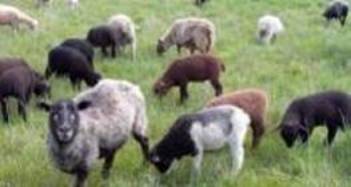
Spring has finally come to Enuff Farm. The creek that became a roaring river during the snow melt and early rains is flowing more calmly now, and shimmers through the fresh greens of the surrounding vegetation. The sheep are gorging on the new grass with lambs cavorting and grazing around them. Their wool coats have been removed and await a new incarnation through the magic of some spinner’s or felter’s hands and inspiration. Most of the flock was shorn by the shepherd using sewing scissors. This was a time consuming and tiring process, but enabled her to shear while the weather was too cold to shear normally and the regular shearer was not available. She got a real good look at each fleece! The remaining animals were shorn in early May. Lambing went well with very few problems. After years of breeding for unusual colours, there were some very interesting lambs born this spring. The rest of this page will be devoted to showing them off and a discussion of their colours and patterns.


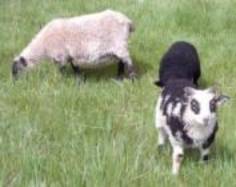
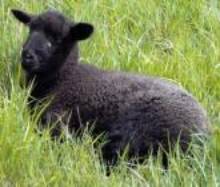
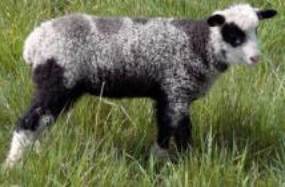
The shepherd was very excited when the above lambs hit the ground! (The first two photos are from the same lamb and the last two are also two views of one animal.) Lots of fun spots! She was disappointed when she discovered that all these lambs may also be genetically grey patterned. The source of the grey pattern in the flock is genes from a Romanov ram used years ago in the former meat flock. All Romanov’s are grey. They have dark heads and legs and light bodies with the course outer coat maintaining black colouring. Similar grey animals are found in the Icelandic breed. In single coated animals in this flock, essentially all of the colour is lost as the animal ages, and often the fleece can be sold as a white fleece. In fact some of whitest fleeces come from “grey” animals. “White” animals are actually genetically “tan” animals that have lost their colour, and may still have some cream shading. The two grey ewes in the above photos were dark at birth and retain a bit of colour on legs and face. In lambs, white ear edges and light hairs on the lips seem to go with the grey pattern. In the above photos, where there are two views of the same lamb, they were taken about five weeks apart. In the outer pictures you can already see fading on the muzzle. The lamb with the “x” on her face may also be exhibiting the English blue pattern or may be only blue and not grey at all. This pattern is common in Lincoln sheep and is distinguished by white “drops” under the eyes. It is hard to determine in this lamb because of the larger white marking in that area. The drops are clear in the ewe in the first sheep photo on the page. Her English blue and spotted lamb also shows this pattern’s characteristic paler saddle area and darker surrounding areas. The following photos show English blue lambs with black colour genetics and, in two, spotting of two different types.
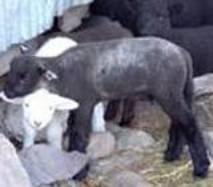
One of the challenges genetically in this flock over the past decade has been the infusion of the genes for brown (moorit). This was done by crossing Romney rams on Icelandic ewes that were moorit or carried it. The progeny of these crosses were interbred and bred with Romney commercial ewe crosses. There were periodic breedings back to pure Romney in an attempt to get moorit animals with Romney type fleeces. There were English blue patterns in some of the commercial animals and perhaps some of the Romneys as well. Now there are animals in the flock with this pattern on a brown background. (Should it be called “English rose”?) The following photos show ewes and lambs with this pattern. They all have the characteristic “drops”, but these are hard to see in the photos.

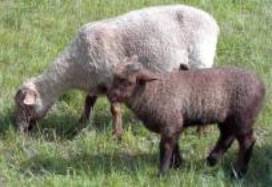
Of course many of the moorit animals do not also have genes for grey or blue pattern. Some hold a rich brown as they age, but most fade to light fawn or beige in parallel to the fading from dark to greys in the “black” animals in the flock. Few Romneys or crosses with them seem to hold a deep colour for long. Most are born quite dark, but some are born with grey already showing at the base of the wool staples. More rarely, they are born a definite grey, though all maintain dark heads and legs. This year the last lamb born was a complete surprise…he has a dark rose grey head, legs, and tips on an almost white fleece. (The last photo in the following group.) The first photo shows a very dark moorit lamb, the next a spotted moorit ewe with her twins following her. Next is an already quite pale ewe lamb with a nice head-spot. Next is a yearling moorit ewe that is already fairly pale but has kept the darker colour on head and legs.


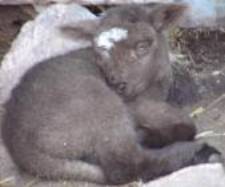
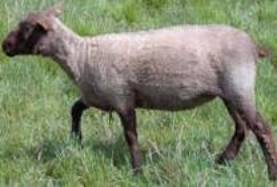
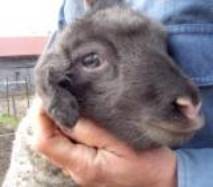
Spotting is something else being bred for in the flock. It doesn’t have much added value for fleece but is sure fun to have and makes identification of individual animals easier. In theory there are not supposed to be spotting genes in Romneys. In this flock there has been some facial spotting in supposedly purebred Romneys, and occasionally some white “snowflake” spots on the tips of the birth coat. The last two photos are current examples of these patterns.


Having a variety of breeds, colours, and patterns in the flock adds interest and fun. It makes it difficult to keep numbers down, however, as it is hard to give up on any of the variations, and one is constantly wanting to see what will arise from different genetic combinations. Many of the Enuff Farm sheep will be needing new homes before fall, for the flock is already over the optimal size for the available pasture, time, and energy. There is a large inventory of older fleeces as well as this year’s clip, so proposals from people in the fibre business to help get it utilized would be welcome as well as purchase orders from fibre artists and crafters. In addition to raw fleece, there a good inventory of rovings processed at Frankenmouth and Stonehedge mills in Michigan. Please contact Chris if you have an interest in purchasing animals or fibre or have questions about the photos or information on the web site.